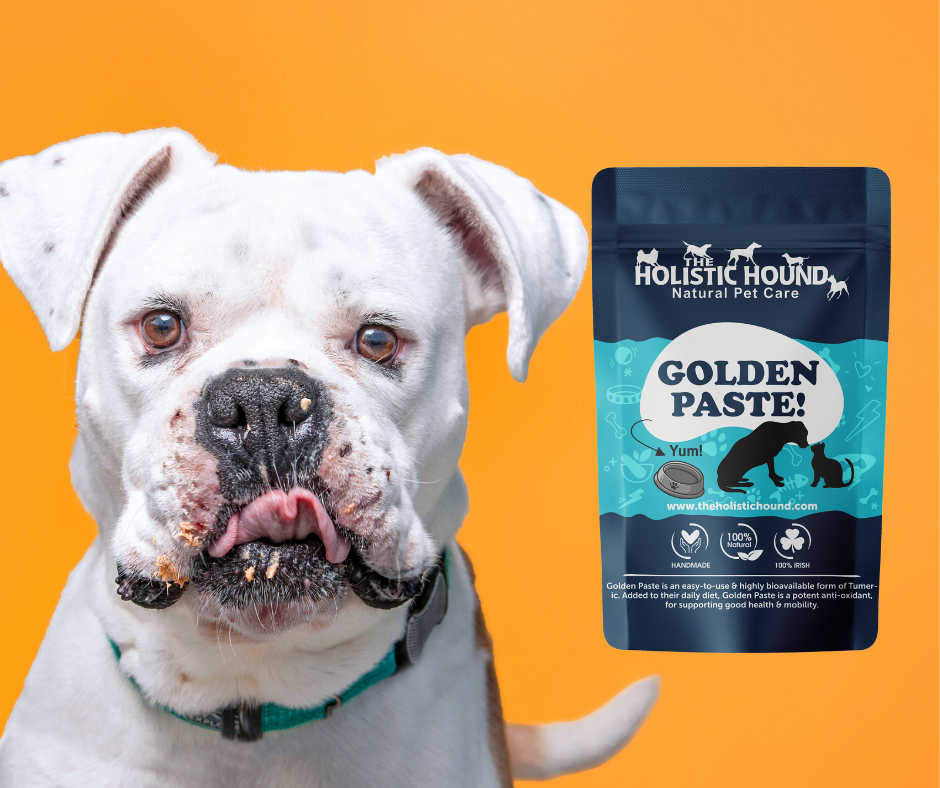
Golden Paste
Regular price
€12.50
Sale price
Calendula officinalis
Common Name: Pot Marigold, Mary-Bud, Gold-Bloom.
Family: Compositae/ Asteraceae
Part used: Dried ligulate florets of plant.
Constituents: Volatile oil; Yellow resin (calendulin) gives antifungal, antiviral and antibacterial properties; Bitter principle; Triterpenes; Pentacyclic alcohols including faradol, brein, arnidiol, erythrodiol, calenduladiol, heliatriol C and F, ursatriol, longispinogenine; Calendulosides; Amyrin; Taraxasterol, lupeol; Flavonoids; Isorhamnetin glycosides, including narcissin and quercetin; Glycosides, including rutin; Chlorogenic acid; Carotenes; Mucilage; Sterols
Calendula carotenoids include Meso-zeaxanthin, Lutein and Zeaxanthin which have been extracted and used to make a product called Macushield which is reported to protect the macula against blue light damage, free radicals and help to replenish macula pigments. Presumably including marigold petals in the diet will do the same thing.
Actions: Spasmolytic; Aperient (stimulates appetite); Cholagogue; Diaphoretic; Anti-inflammatory; Anti-haemorrhagic; Emmenagogue (promotes menstruation); Vulnerary (helps heal wounds); Styptic (stops bleeding); Antiseptic; Mildly oestrogenic; Astringent; Anti-oxidant
Traditional and current uses:
Gastric and duodenal ulcers
Colitis, gastritis, oesophagitis
Diarrhoea
Enlarged or inflamed lymph nodes
Skin conditions, both internally and externally
Burns and sunburn, topically
As eyewash for conjunctivitis. Also believed to replenish eye pigments when taken internally and protect the tissues of the eye
Compresses for mastitis
Clearing to the liver
Fresh juice for warts
The flowers are traditionally thought to lift the spirits and encourage cheerfulness.